
Through the Waters
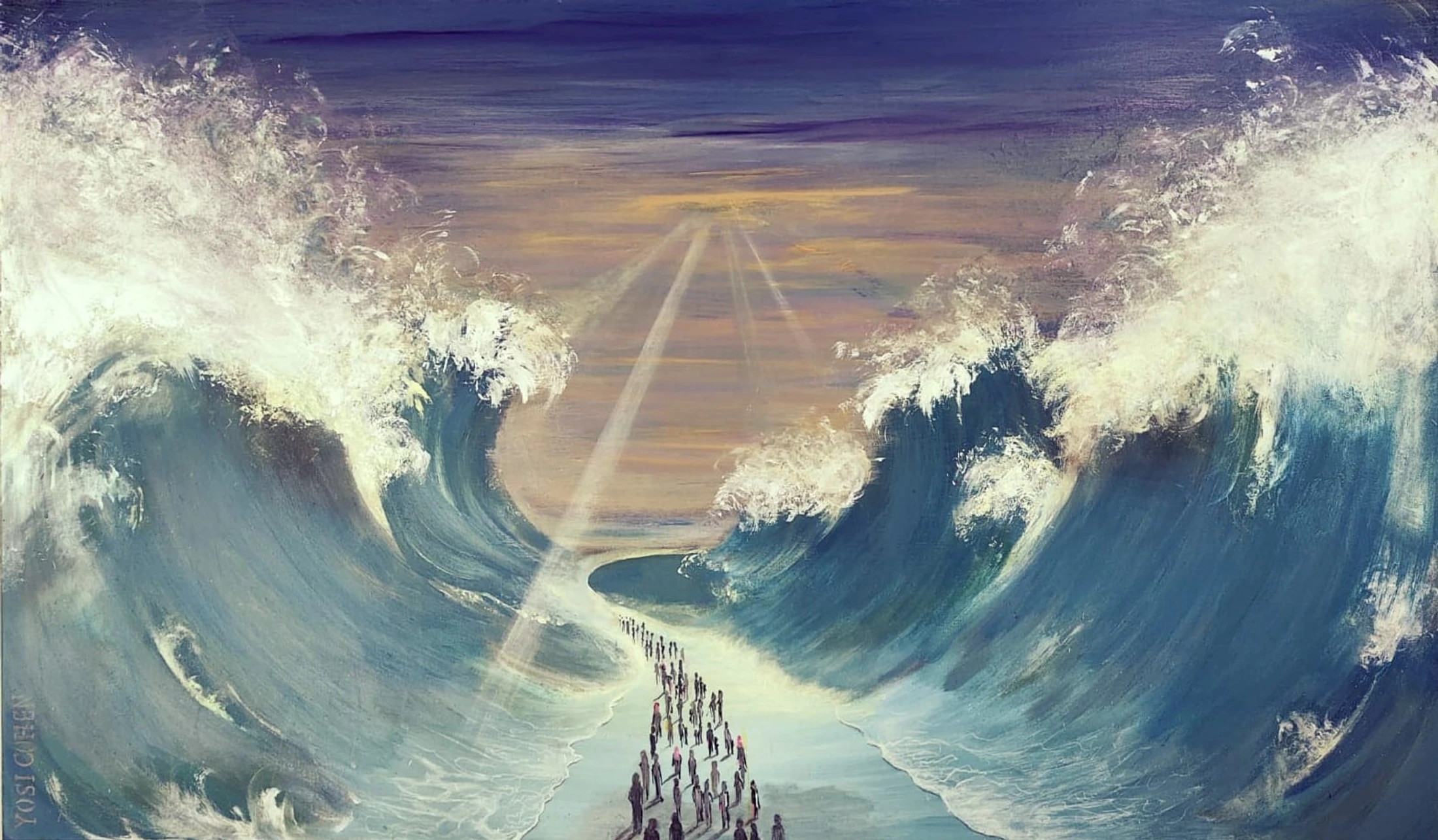
Exodus 14:21–31 (NASB95)
21Then Moses stretched out his hand over the sea; and the LORD swept the sea back by a strong east wind all night and turned the sea into dry land, so the waters were divided. 22The sons of Israel went through the midst of the sea on the dry land, and the waters were like a wall to them on their right hand and on their left. 23Then the Egyptians took up the pursuit, and all Pharaoh’s horses, his chariots and his horsemen went in after them into the midst of the sea. 24At the morning watch, the LORD looked down on the army of the Egyptians through the pillar of fire and cloud and brought the army of the Egyptians into confusion. 25He caused their chariot wheels to swerve, and He made them drive with difficulty; so the Egyptians said, “Let us flee from Israel, for the LORD is fighting for them against the Egyptians.” 26Then the LORD said to Moses, “Stretch out your hand over the sea so that the waters may come back over the Egyptians, over their chariots and their horsemen.” 27So Moses stretched out his hand over the sea, and the sea returned to its normal state at daybreak, while the Egyptians were fleeing right into it; then the LORD overthrew the Egyptians in the midst of the sea. 28The waters returned and covered the chariots and the horsemen, even Pharaoh’s entire army that had gone into the sea after them; not even one of them remained. 29But the sons of Israel walked on dry land through the midst of the sea, and the waters were like a wall to them on their right hand and on their left. 30Thus the LORD saved Israel that day from the hand of the Egyptians, and Israel saw the Egyptians dead on the seashore. 31When Israel saw the great power which the LORD had used against the Egyptians, the people feared the LORD, and they believed in the LORD and in His servant Moses.
Commentary - Through the Waters
The crossing of the Red Sea stands as one of the most powerful moments in all of Scripture. God commands Moses to stretch out his hand, and the waters part, allowing Israel to walk through on dry ground. This event is not just a story of escape. It is a living picture of the Gospel and the Christian life. The Red Sea crossing foreshadows the sacrament of baptism. From the very beginning, God has used water as a symbol of new creation and deliverance. In Genesis, the Spirit of God hovered over the waters, and the world emerged from chaos. In Noah’s day, the floodwaters brought judgment but also salvation for those in the ark. Now, at the Red Sea, the Israelites enter the water as slaves—without identity, purpose, or home—and emerge as a new people, set apart for God. Paul writes in 1 Corinthians 10 that Israel was “baptized into Moses in the cloud and in the sea.” This baptism into Moses points forward to Christ, for Moses leads the people on the path that will ultimately bring them to the Messiah. The Gospel is not just a New Testament idea. It is woven through the story of Exodus, showing that God’s plan for redemption has always been at work.
God’s timing in collapsing the sea on the Egyptians is deliberate. He waits until daybreak, allowing the Israelites to witness the complete defeat of their oppressors. This is not a random detail. God knows that His people need to see the power of their Deliverer. For generations, they had lived under the shadow of Egypt’s might. To break their slave mentality and build true faith, they needed to see that their enemies were powerless before the Lord. Modern psychology recognizes the importance of closure and witnessed victory in healing from trauma. Survivors often need a clear, tangible moment that marks the end of oppression and the beginning of a new identity. God, in His wisdom, provides this for Israel. He gives them a moment they will never forget, a turning point that allows them to move from victims to a people with hope and purpose.
Verse 31 draws a sharp line between belief and faith. The people “feared the Lord, and they believed in the Lord and in His servant Moses.” In Wesleyan theology, belief is more than intellectual agreement. Faith is trust, a relational commitment that transforms the heart and leads to obedience. The Israelites have seen God’s power with their own eyes. They move from passive belief to active trust. This is the lesson the Red Sea was meant to teach. But the question remains: will they remember? The rest of Exodus will test whether this new faith takes root or fades with time.
For the church today, the Red Sea crossing calls us to remember our own baptism and what it means. Baptism is not just a ritual. It is the mark of a new identity. We enter the water as sinners, lost and without hope, and rise as new creations in Christ. God calls us to witness His victories, to let them shape our faith, and to move from mere belief to active, living trust. Our mission is to remember what God has done, to teach it to the next generation, and to walk forward in faith, trusting that the God who parted the sea still leads His people today.
In His Service,
Ryan Goodnight