
Guided by God’s Hand
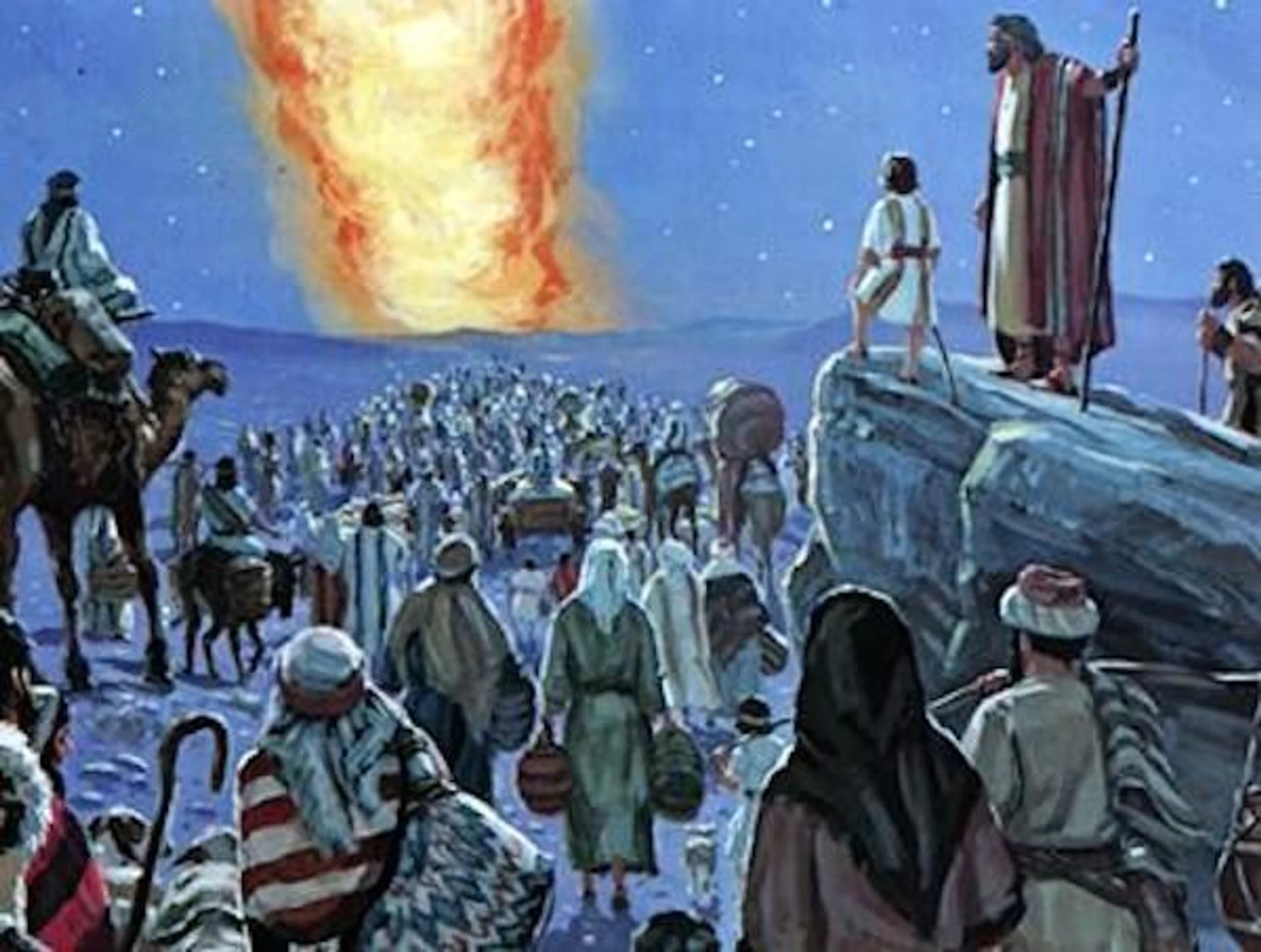
Exodus 13:13–22 (NASB95)
13“But every first offspring of a donkey you shall redeem with a lamb, but if you do not redeem it, then you shall break its neck; and every firstborn of man among your sons you shall redeem. 14“And it shall be when your son asks you in time to come, saying, ‘What is this?’ then you shall say to him, ‘With a powerful hand the LORD brought us out of Egypt, from the house of slavery. 15‘It came about, when Pharaoh was stubborn about letting us go, that the LORD killed every firstborn in the land of Egypt, both the firstborn of man and the firstborn of beast. Therefore, I sacrifice to the LORD the males, the first offspring of every womb, but every firstborn of my sons I redeem.’ 16“So it shall serve as a sign on your hand and as phylacteries on your forehead, for with a powerful hand the LORD brought us out of Egypt.” 17Now when Pharaoh had let the people go, God did not lead them by the way of the land of the Philistines, even though it was near; for God said, “The people might change their minds when they see war, and return to Egypt.” 18Hence God led the people around by the way of the wilderness to the Red Sea; and the sons of Israel went up in martial array from the land of Egypt. 19Moses took the bones of Joseph with him, for he had made the sons of Israel solemnly swear, saying, “God will surely take care of you, and you shall carry my bones from here with you.” 20Then they set out from Succoth and camped in Etham on the edge of the wilderness. 21The LORD was going before them in a pillar of cloud by day to lead them on the way, and in a pillar of fire by night to give them light, that they might travel by day and by night. 22He did not take away the pillar of cloud by day, nor the pillar of fire by night, from before the people.
Commentary - Guided by God’s Hand
Exodus 13:13-22 offers a window into how God shapes His people for the journey ahead. In verse 13, the law singles out the donkey as unique among Israel’s animals. Unlike cattle, sheep, or goats, the donkey was considered unclean and could not be sacrificed. Yet, its firstborn still belonged to God. To redeem a firstborn donkey, the owner had to offer a lamb in its place. If the donkey was not redeemed, its neck was broken. This command did more than uphold ritual purity. The lamb given for redemption was used to feed the priests, ensuring that those who served in the tabernacle were provided for. God’s law cared for both the spiritual and practical needs of the community, making sure the priestly class was sustained through the obedience of His people.
When the Israelites left Egypt, God did not take them on the shortest route to Canaan. Verse 17 explains that although the road through Philistine territory was direct, God led them another way. He knew that if the people faced war too soon, they might lose heart and return to Egypt. Sometimes the most direct route is not the best route. God sees dangers and challenges we cannot. He leads us on paths that prepare us, even when they seem longer or harder. Trusting God’s direction means believing that His wisdom is greater than our own understanding.
Verse 18 continues the theme of transformation. The Israelites left Egypt “armed for battle.” The Hebrew word here, chamushim, means arranged in military formation. Earlier, Israel was called the “hosts” of the Lord, using the word tsaba, which means army or organized force. Now, as they march out, they are no longer a disorganized group of slaves. God sees them as His army, ready for the journey and the battles ahead. This also prepares us for the future assignment Yahweh will give his people as the journey into the Promised Land. This military language reminds us that God prepares His people for spiritual and practical challenges. He calls us to be organized, united, and ready to serve His purposes.
The journey itself was marked by God’s visible presence. Verse 21 tells us that the Lord went before them in a pillar of cloud by day and a pillar of fire by night. The people had to follow wherever the Lord led to remain safe and on the right path. This is more than a story of ancient travel. It foreshadows the call of discipleship in the New Testament. Just as the Israelites followed the Lord’s presence, believers today are called to follow Jesus and the guidance of the Holy Spirit. Discipleship means trusting God’s leading, even when the way is unfamiliar or difficult. The pillar of cloud and fire points us to the promise that God is always with His people, guiding and protecting them.
For our church today, these verses remind us to trust His direction, even when it does not make sense. We are called to support those who serve, just as Israel supported the priests. We are also reminded that our Lord sees us as His people, organized and ready for His mission. Most importantly, we are called to follow Christ and the Holy Spirit wherever They lead, knowing that true safety and purpose are found in obedience.
In His Service,
Ryan Goodnight