
Drawn Lines and Divine Protection
Exodus 8:20–24 (NASB95)
20Now the LORD said to Moses, “Rise early in the morning and present yourself before Pharaoh, as he comes out to the water, and say to him, ‘Thus says the LORD, “Let My people go, that they may serve Me. 21“For if you do not let My people go, behold, I will send swarms of flies on you and on your servants and on your people and into your houses; and the houses of the Egyptians will be full of swarms of flies, and also the ground on which they dwell. 22“But on that day I will set apart the land of Goshen, where My people are living, so that no swarms of flies will be there, in order that you may know that I, the LORD, am in the midst of the land. 23“I will put a division between My people and your people. Tomorrow this sign will occur.” ’ ” 24Then the LORD did so. And there came great swarms of flies into the house of Pharaoh and the houses of his servants and the land was laid waste because of the swarms of flies in all the land of Egypt.
Commentary - Drawn Lines and Divine Protection
The fourth plague arrives with a familiar pattern. God sends Moses to meet Pharaoh early in the morning, once again by the Nile. The setting is deliberate. The Nile was the sacred artery of Egypt, the place where Pharaoh performed his morning rituals and where the gods of Egypt were believed to be most present. God keeps showing up in the places Egypt considered most holy, and He keeps making the same point. There is no territory in Egypt that belongs to anyone but Him.
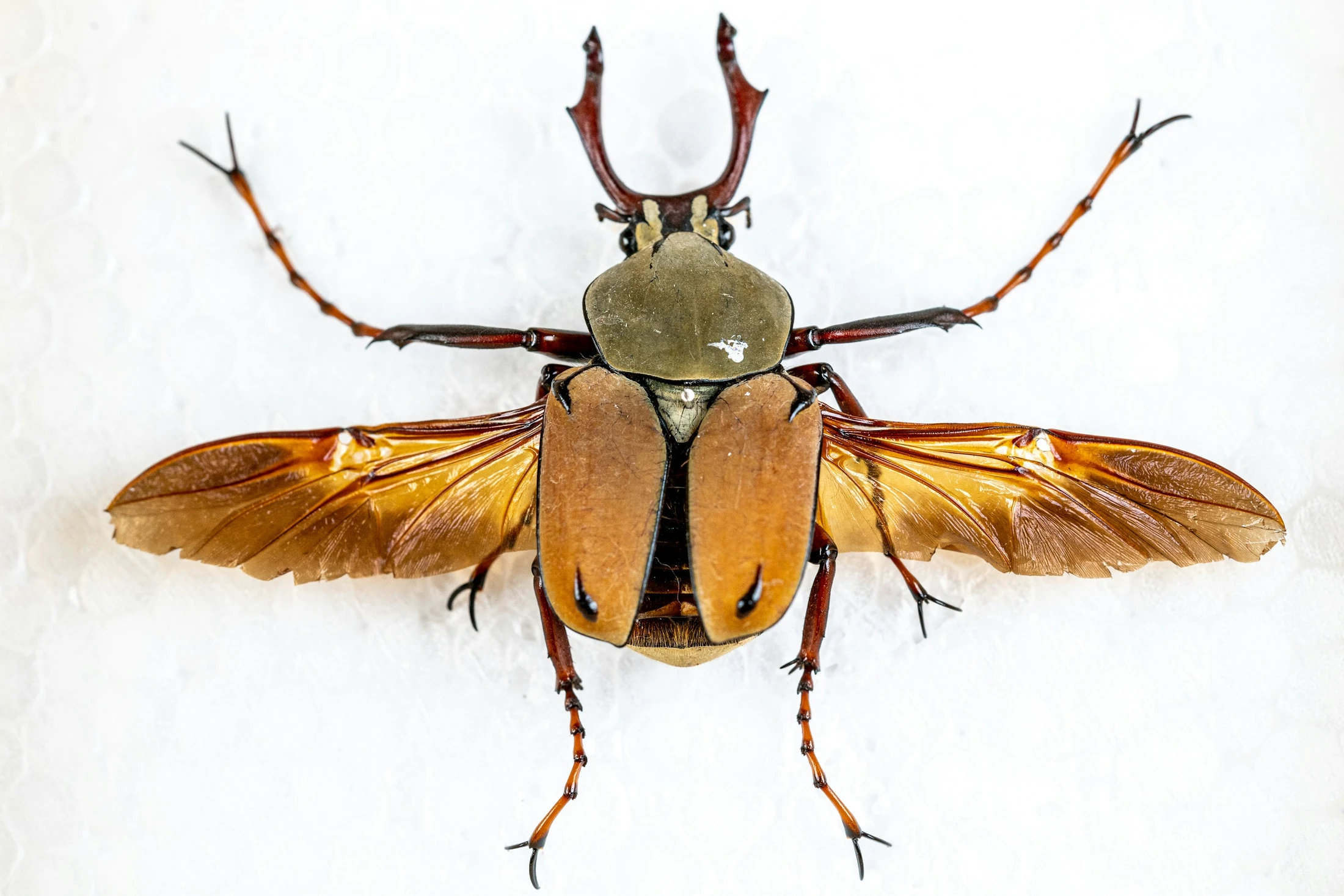
The plague itself is described as swarms of insects. The Hebrew word is arov, which most scholars understand to refer to a dense, biting swarm, likely flies or possibly a mixture of insects. The most widely supported reading points to flies, specifically the scarab beetle or a related insect. That identification matters enormously. The scarab beetle was one of the most sacred symbols in all of Egyptian religion. Khepri, the god of the rising sun and transformation, was depicted with the head of a scarab beetle. The Egyptians believed Khepri rolled the sun across the sky each morning just as a dung beetle rolls its ball across the ground. Scarab amulets were worn by the living and placed on the bodies of the dead as symbols of protection, rebirth, and divine power. The scarab was everywhere in Egyptian life, on jewelry, in temples, on royal seals, and in burial rites. When God sent swarms of these insects to torment Egypt, He was not just creating a nuisance. He was taking one of Egypt's most beloved sacred symbols and turning it into a plague. Khepri, the god of transformation and new life, could not protect his own people from the very creature that represented him. The theological statement is unmistakable. Yahweh is sovereign over the things Egypt worships.
But the most significant development in these verses is not the plague itself. It is what God does with the land of Goshen. For the first time in the plague narrative, God draws a line. He tells Pharaoh in advance that the swarms will cover all of Egypt, but the land of Goshen, where His people live, will be spared. The Hebrew word behind this is ‘peduth’, which means a distinction, a separation, or a redemptive act. This is not just a geographical boundary. It is a theological declaration. God is saying to Pharaoh, to Egypt, and to Israel: My people are not the same as everyone else. I know where they live. I know who they are. And My judgment does not fall on them the way it falls on those who reject Me.
This is the first time in the plagues that the Israelites are explicitly protected. The earlier plagues affected everyone. The Nile turned to blood for Israelite and Egyptian alike. The frogs invaded every home. The gnats covered every person. But now, God makes a distinction. He separates His people from the judgment falling on Egypt. This is not favoritism in a petty sense. It is a revelation of God's identity and His covenant faithfulness. He had made promises to Abraham, Isaac, and Jacob. He had told Moses at the burning bush that He had seen the suffering of His people and was coming to deliver them. The separation of Goshen is the first visible, geographic proof that God keeps His word. The Israelites could look around and see that the swarms were not in their homes, not on their children, not in their fields. God had drawn a line, and that line held.
For the church today, the separation of Goshen carries a message that is just as relevant now as it was then. God's people have always been called to be distinct. Not isolated, not arrogant, not disconnected from the world around them, but genuinely different in the way they live, the way they love, and the things they trust. I have watched people try to blend in so completely with the surrounding culture that there is no visible difference between their lives and the lives of people who have never encountered God. The story of Goshen pushes back against that. God drew a line. He made a distinction. He said, in effect, that the world should be able to look at His people and see something different. That distinction is not about superiority. It is about identity. We belong to Someone, and that belonging should show.
In His Service,
Ryan Goodnight