
A Special God and Holy Ground
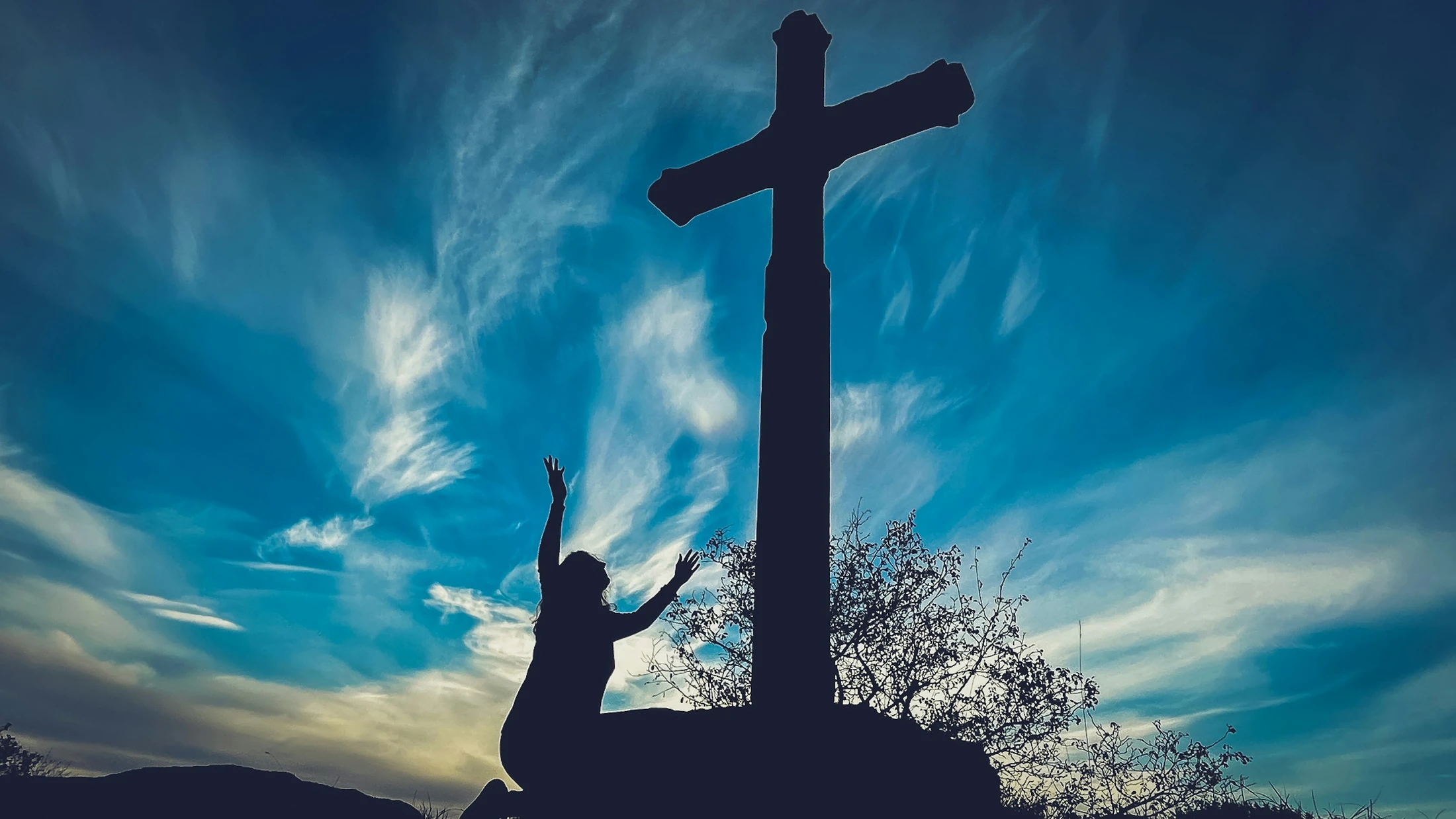
Exodus 3:5–7 (NASB95)
5Then He said, “Do not come near here; remove your sandals from your feet, for the place on which you are standing is holy ground.” 6He said also, “I am the God of your father, the God of Abraham, the God of Isaac, and the God of Jacob.” Then Moses hid his face, for he was afraid to look at God. 7The LORD said, “I have surely seen the affliction of My people who are in Egypt, and have given heed to their cry because of their taskmasters, for I am aware of their sufferings.
Commentary – A Special God and Holy Ground
There is a moment in Exodus 3 that can be easy to overlook. Moses, a shepherd far from Egypt and the life he once knew, stops at an ordinary bush in the wilderness of Horeb. Suddenly, God speaks. The ground beneath Moses becomes holy ground. An ordinary afternoon in the wilderness becomes the most sacred space on earth. These verses carry some of the most important truths in all of Scripture. They speak to what holiness really means, to where God can be found, and to exactly who is doing the speaking.
The first thing God tells Moses is to take off his sandals, because the ground on which he stands is holy. Before God even reveals His name, He begins to teach Moses about the nature of His presence. Holiness means being set apart, dedicated, separated from ordinary use, and reserved entirely for God and His purposes. When God declares the ground holy, He is not simply saying it is special in a pleasant way. He is saying it belongs to Him. It is set apart for His work. This moment previews what will happen later at Mount Sinai, where God will command the people to put limits around the mountain and set it apart as holy. Sinai is implicitly identified as Yahweh’s place, and the very ground becomes holy because He is there. If God sets apart a mountain, how much more does He set apart His people? To be called holy as God’s people is not a lofty compliment. It is an assignment. We are set apart from ordinary use. We belong to Him, reserved for His work and His purposes alone. Just as Sinai was not an ordinary mountain but a mountain reserved for extraordinary things, we are not ordinary people simply going about ordinary lives. We are His, and He has given us a specific work that no one else can fulfill.
The setting of this encounter matters deeply. Moses is not in a temple, not in Jerusalem, not at an altar, not in any place that anyone would think to designate as sacred. He is in the wilderness, doing common labor, watching flocks, when the living God interrupts his afternoon. God did not wait for Moses to find the right place or the right circumstances. He met him right where he was. God is not confined to our sanctuaries, our Sunday mornings, or the places we have decided are appropriate for holy things. He is omnipresent, which means that any location on this earth can become the site of a holy encounter with the Lord. The wilderness was not a spiritual retreat center. It was dusty and remote and entirely unremarkable. Yet it became the ground on which one of the most important moments in Israel’s history took place. If God can meet a runaway prince turned shepherd at an ordinary bush in the middle of nowhere, He can meet us in our offices, our hospitals, our seasons of grief, and our moments of confusion. He can meet us in the darkest of places, and the darkness does not dim His presence one degree. We should never assume that a place is too ordinary, or too broken, or too far from anything sacred for God to show up there.
Then comes the moment that may seem strange at first. God introduces Himself. He says, “I am the God of your father, the God of Abraham, the God of Isaac, and the God of Jacob.” Moses hides his face, afraid to look at God. Why would God need to introduce Himself to Moses? Surely Moses knew the stories of Abraham, Isaac, and Jacob. But Moses grew up in Egypt, one of the most aggressively polytheistic cultures the ancient world ever produced. Egypt had gods for the sun, the river, the harvest, death, and the afterlife. They literally had hundreds of gods. The Hebrews themselves, having lived as slaves in that culture for generations, were immersed in a world saturated with deities. When a voice came from a burning bush, a man shaped by that world would have had every reason to wonder which god was speaking. God knows this. So He does something deliberate and precise. He identifies Himself. He connects Himself to the covenant line of Abraham, Isaac, and Jacob. He is not one of the gods of Egypt. He is not a local spirit of the wilderness or a deity of fire. In a few more verses, He will identify Himself further by giving us His name. He is Yahweh, the One who made promises to the patriarchs and who keeps them. Scholars have noted that verse 3:6 is noteworthy for its careful, deliberate identification of the true God. This is God drawing a clear line between Himself and every other imposter god Moses has ever heard of. This is one of the great themes that will thunder through the rest of Exodus. Yahweh is about to confront the gods of Egypt directly. Every plague, every act of power, every parting of waters will be a declaration: I am not like them. I am not a pretender. I am not a regional deity with limited territory and limited power. I am the Almighty, and there is no one like Me. Worship me. The God who speaks to Moses at the bush is the same God who will bring Pharaoh to his knees. That is who we serve. Never forget who our God is.
These ancient truths speak to us today. Many of us live in a culture crowded with competing voices telling us where to place our trust, our devotion, and our ultimate loyalty. The gods of our age may not have names carved into stone, but they are just as demanding. Yahweh still sets apart His people for His purposes. No one and nothing else has a claim on who we are and what we do with our lives. He can meet us anywhere, and no season of life is so desolate that His presence cannot fill it. The One we follow has already proven Himself over every power, over every false god, and over every force that has ever claimed authority over human lives. Moses left that bush a changed man, not because of where he was, but because of Who he had encountered. The same encounter is available to us, not at a burning bush in the wilderness, but in the everyday moments where the living God still speaks to those who are looking for Him.
In His Service,
Ryan Goodnight